
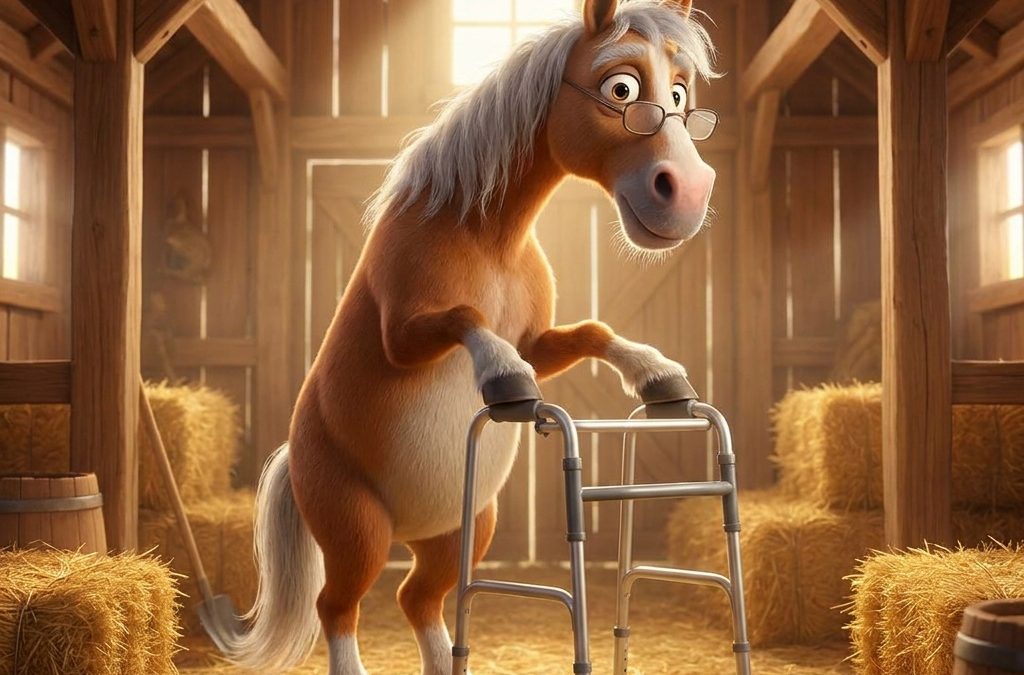
Ahhh winter… cold mornings, frozen water troughs, muddy gateways and that overwhelming desire to stay tucked up in a warm bed for just another five minutes! Well, our older equine friends can feel much the same. Just like us, horses can feel a little stiffer when the temperature drops, particularly if they’re living with arthritis. Those cold mornings can make getting out of bed (or out of the stable!) feel like a bit more of an effort. But when does a little stiffness become something we should be concerned about?
Why can winter be harder on our horses’ joints?
Arthritis, otherwise known as osteoarthritis, is a progressive condition involving changes to the cartilage, bone and surrounding structures within a joint, often accompanied by inflammation and pain. During the winter months, we often see horses spending longer in their stables, having less turnout and doing considerably less exercise. Combine this with colder temperatures, slippery ground and reduced opportunities for natural movement, and it’s not surprising that some of our older horses start to struggle. Joints generally benefit from regular, controlled movement. Movement helps circulate synovial fluid (the joint’s natural lubricant), whilst maintaining the muscles that support and stabilise those joints. Standing still for 12–16 hours overnight isn’t necessarily doing our arthritic horses any favours!
So, what should you be looking out for?
Not all lameness is obvious. Horses can be incredibly good at compensating for discomfort, particularly when it develops gradually or affects more than one limb.
Things to look out for include:
- Stiffness when first coming out of the stable.
- Taking a little longer than usual to loosen up.
- Shorter strides or reduced flexibility.
- Reluctance to move around as freely as usual.
- Difficulty picking up their feet for the farrier.
- Struggling to lie down or get back up again.
- Changes in ridden performance or willingness to work.
- Loss of muscle tone, particularly over their back and hindquarters.
- Finding everyday activities a little more challenging.
Sometimes it’s the little things that tell us the most. Perhaps your horse isn’t quite as enthusiastic about coming across the field to meet you, or they’re suddenly becoming a little grumpy when you pick up their hind feet or your farrier is struggling to get them to hold up their back legs for a trim.
A change in behaviour is often your horse’s way of telling you something isn’t quite right.
How can we help our older equine friends?
1. Keep them warm and comfortable
Suitable rugging can help maintain comfort during the colder months. However, rug according to your individual horse’s needs, body condition, coat and living arrangements rather than simply the temperature outside. A comfortable, dry bed that allows your horse to lie down and get back up confidently is equally important.
2. Keep them moving
Motion is lotion!
Regular, gentle movement can be incredibly beneficial for horses living with arthritis. Where appropriate, encourage turnout, gentle hacking, in-hand walking or controlled exercise. Consistency is key. Doing very little during the week and then heading out for a mammoth hack at the weekend isn’t necessarily the best approach for an arthritic horse. Remember, however, that a horse with new or worsening lameness should be assessed before increasing its exercise.
3. Watch their waistlines
We all love to spoil our horses, but carrying unnecessary weight places additional strain on already compromised joints. Maintaining a healthy body condition, alongside preserving muscle mass, can make a considerable difference to your horse’s mobility and comfort. Older horses don’t necessarily need more calories simply because they’re older. They need appropriate, balanced nutrition tailored to their individual requirements.
4. Think about what’s underneath their feet
Deep mud, frozen ruts, slippery gateways and uneven surfaces can all make life considerably more difficult for horses with compromised mobility. Providing safe, comfortable footing with good grip allows horses to move around more freely and confidently without constantly bracing themselves to avoid slipping.
5. Don’t forget their feet!
Good foot balance is incredibly important when it comes to managing joint health. Poor foot balance can alter the way forces travel through the limb, potentially increasing strain on joints, tendons and ligaments. Working closely with your vet and farrier can help ensure your horse is receiving the support they need from the ground up.
Is it arthritis or something else?
One of the biggest mistakes we can make is assuming that because a horse is older, their stiffness must simply be arthritis. Winter lameness can also be associated with foot abscesses, poor saddle fit, laminitis, soft tissue injuries, back pain and a whole host of other conditions. Even if your horse has previously been diagnosed with arthritis, it doesn’t mean that every subsequent episode of lameness is caused by it. A horse that is suddenly severely lame or reluctant to bear weight requires urgent veterinary attention.
What can we do at Little Rock Equine Vets?
Every horse is different, and managing lameness isn’t a one-size-fits-all exercise. The upside of letting us take a look is that we can investigate your horse’s mobility and lameness issues at your own yard, where they are comfortable and no running on adrenaline because they’ve come to a new place to be worked up. Using our portable digital X-ray and ultrasound equipment we can even do this without the need for electricity, as all our equipment is battery powered. Depending on our findings, management may involve changes to exercise, veterinary-prescribed pain relief, joint medication, nutritional support, remedial farriery and/or physiotherapy. We firmly believe that working together with your horse’s team of professionals gives us the best opportunity to keep them comfortable, mobile and enjoying life.
Getting older is inevitable – being uncomfortable shouldn’t be.
Just because your horse has a few more grey hairs and a few more miles on the clock doesn’t mean we should accept discomfort as part and parcel of getting older. Whether they’re still out competing, enjoying gentle hacks or living their best retirement life as a professional lawnmower, they deserve to be comfortable. If you’ve noticed your horse becoming stiffer, less willing to move or simply not quite themselves, give us a shout on 01782898102
We’re always happy to help get to the bottom of things and keep your four-legged friends feeling their best.