
Equine Lameness Investigations in Staffordshire
Call nowSomething not quite right with your horse? Let’s get to the bottom of it
We’ve all had that horrible feeling. Your horse just isn’t quite right.
Perhaps they’re not moving as freely as they used to. Maybe they’re struggling with something they used to find easy, refusing fences, finding one rein harder than the other, or simply not performing as well as you know they can.
Is it the saddle? Have they tweaked something while throwing shapes in the field? Is it their back, their feet, or something else entirely? And where do you even start?
At Little Rock Equine Vets, we know how frustrating and worrying it is when you can’t put your finger on what’s wrong. Investigating lameness and poor performance shouldn’t mean loading your horse into a trailer, travelling miles to a clinic and spending a fortune before you’ve got any answers.
So we bring the lameness investigation to you, on your own yard, across Staffordshire, Cheshire and Derbyshire.
To book a lameness or poor performance investigation, call 01782 898102.
What does a lameness investigation involve?
Whether your horse is obviously lame or just isn’t performing as well as they used to, we’ll work with you to find out what’s going on and, most importantly, what we can do about it. Our equine vets can carry out a full lameness and poor performance assessment at your yard, including:
- Full clinical examination. Looking at your horse as a whole, not just the leg you think is causing the problem.
- Trot-ups and gait assessments. On hard and soft surfaces, where available.
- Flexion tests. Helping us identify areas of discomfort and possible sources of lameness.
- Back and sacroiliac assessments. Because not every performance problem starts in the legs.
- Ridden assessments. Some problems only show up when your horse is working under saddle.
- Diagnostic nerve blocks. Where appropriate, to help us localise the source of pain.
- Digital X-rays. To look at bones, joints and foot balance.
- Ultrasound. To assess tendons, ligaments and other soft tissue.
And the best bit? Your horse doesn’t have to leave home.
Portable X-rays and ultrasound, no clinic required
As a fully ambulatory equine practice, we bring our diagnostic equipment with us. Our vehicles carry portable digital X-ray and ultrasound machines, so we can investigate many lameness problems there and then, rather than automatically referring your horse elsewhere for imaging.
Our equipment is battery-powered, so we don’t even need access to electricity. Whether we’re checking a suspected tendon injury, assessing joint changes or looking at foot balance, we can take diagnostic images right there on your yard, as long as there’s a suitable, safe area to work in.
The X-ray unit is wireless and digital, so if we’d like a second opinion, we can email images straight to orthopaedic specialists.
What this means for you and your horse:
- No unnecessary trips to a veterinary clinic
- No extra transport costs, or the stress of travelling
- Familiar surroundings, so your horse is less likely to get an adrenaline rush that masks the signs you’re seeing at home
- Examination and diagnostic imaging in the same visit, where appropriate
- A clearer idea of what might be causing the problem and what happens next
Some cases will need more advanced investigations or referral, and we’ll always be open and honest with you about that. Our close links with referral centres such as Leahurst Equine Hospital mean we can refer your horse quickly to the centre of your choice.
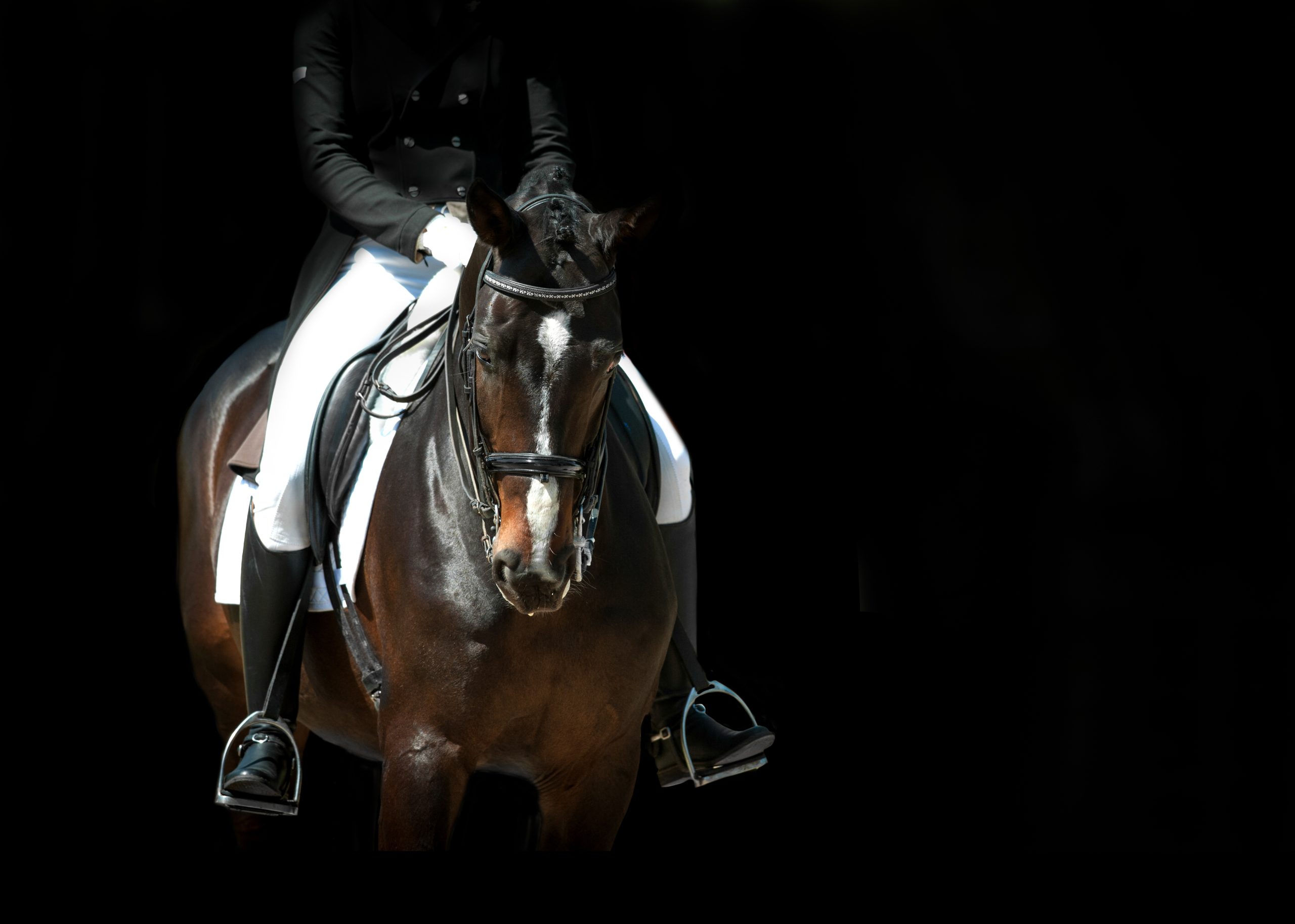
Poor performance: when your horse just isn’t quite right
Not every lame horse looks lame, and this is something we’re particularly passionate about. Sometimes the first sign that something’s wrong is a change in behaviour or performance. Perhaps your horse has started:
- Struggling with canter transitions or holding the correct lead
- Refusing fences or stopping when they normally wouldn’t
- Resisting when asked to work in an outline
- Feeling uneven, stiff or reluctant to go forwards
- Finding lateral work or one rein more difficult
- Becoming uncomfortable when being saddled or ridden
- Losing confidence or becoming harder to ride
It’s easy to put these changes down to behaviour, training or your horse simply being a bit naughty. But what if they’re trying to tell us something hurts? Our ridden assessments let us see your horse doing the job you ask of them, rather than relying only on a trot-up. Sometimes the problem doesn’t become obvious until there’s a rider on board.
Working together to get you back in the saddle
We don’t look at your horse in isolation. Your farrier might have noticed a change in hoof balance. Your physiotherapist may have found areas of muscular discomfort. Your saddler might have concerns about how your horse moves under the saddle. And you, as the owner, know when something just doesn’t feel right.
All of that information matters. Our job is to bring those pieces of the puzzle together, investigate the possible causes and put together a sensible plan for your horse. We’re happy to work alongside your farrier, physio, saddler or trainer, including on remedial farriery, because getting your horse back on track is a team effort.
Clear costs and no pressure
We know veterinary investigations can be expensive. That’s why we aim to be transparent about costs, talk you through the options and help you make informed decisions about the next steps.
You should never feel pressured into investigations you don’t understand, and you’ll always know why we’re recommending a particular test.
For current fees, see our pricing and terms page or call us on 01782 898102.
Our team is here to help
Lameness investigations can involve a fair bit of running around, sometimes quite literally!
Where needed and arranged in advance, our experienced horse handlers can come along with our vets to help with examinations, trot-ups and diagnostic procedures. That means you don’t have to find someone to hold your horse or trot them up.
It also lets our vets concentrate on what matters most: assessing your horse safely and thoroughly.
To arrange a handler with your visit, call 01782 898102.
Don’t wait until a small problem becomes a big one
One thing we hear a lot is: “I knew something wasn’t right, but I thought I’d give it a few weeks and see if it improved.”
We completely understand why. But subtle changes in movement, behaviour or performance can be the earliest signs of an underlying problem. Spotting them sooner helps us make better decisions about treatment, management and rehabilitation.
So if your horse isn’t quite right, don’t keep wondering what’s wrong. Let’s investigate it together.
Areas we cover
- Stoke-on-Trent – ST1, ST2, ST3, ST4, ST6
- Keele – ST5
- Leek & Cheddleton – ST13
- Uttoxeter – ST14
- Stone & Hilderstone – ST15
- Stafford, Great Haywood & Eccleshall – ST16, ST18, ST21
- Blythe Bridge – ST11
- Ashbourne – DE6
- Rugeley – WS15
- Market Drayton – TF9
- Bridgemere – CW5
- Crewe – CW1, CW2, CW3, CW4
- Congleton – CW12
- Macclesfield – SK10, SK11
- Rocester – ST14
- Sandbach – CW11
- Cannock Wood – WS11
- Penkridge – ST19
If your location isn’t listed, please don’t hesitate to get in touch.
Why choose Little Rock Equine?
When your horse isn’t right, you want a vet who looks at the whole picture and explains things clearly. Here’s what you can expect from us:
- Experienced, equine-only vets
- Lameness and poor performance investigations at your yard
- Portable, battery-powered digital X-ray and ultrasound
- Ridden assessments as well as trot-ups
- Experienced horse handlers available when arranged in advance
- Honest advice and transparent costs
- Close links with referral centres for complex cases
Lameness investigation FAQs
Do I need to bring my horse to a clinic?
No. We carry out lameness and poor performance investigations on your own yard. Our portable digital X-ray and ultrasound machines are battery-powered, so all we need is a suitable, safe area to work in.
My horse isn't lame, but something isn't right. Should I call?
Yes. Not every lame horse looks lame. Refusing fences, struggling with canter leads, resisting work in an outline or becoming uncomfortable when saddled can all be signs of pain. It’s always worth getting it checked.
What is a ridden assessment?
It’s a chance for us to watch your horse working under saddle, doing the job you ask of them. Some problems only show up with a rider on board, so a ridden assessment can reveal things a trot-up won’t.
What are diagnostic nerve blocks?
A nerve block uses local anaesthetic to temporarily numb a specific area of the leg or foot. If your horse moves better afterwards, it helps us pinpoint where the pain is coming from. We only use them where appropriate.
Do I need someone to help on the day?
Not necessarily. If arranged in advance, our experienced horse handlers can come along to hold your horse, trot them up and help during the examination.
Can you work with my farrier, physio or saddler?
Absolutely. Their insights help us build a clearer picture of what’s going on, and we’re happy to work alongside them, including on remedial farriery, to get your horse back on track.
Will my horse need to be referred?
Many lameness problems can be investigated on your yard. If your horse needs further diagnostics we can’t provide, such as MRI, we can refer you quickly to the centre of your choice, such as Leahurst Equine Hospital. We’ll always be honest with you about when that’s needed.
How much does a lameness investigation cost?
It depends on what your horse needs. We’ll be transparent about costs, talk you through the options and explain why we’re recommending each test. Call us on 01782 898102 or see our pricing and terms.
Is your horse not quite right?
Whether it’s an obvious lameness, a frustrating performance issue or just that nagging feeling that something isn’t right, our team is here to help. Call us on 01782 898102 or email info@littlerockequinevets.co.uk.