
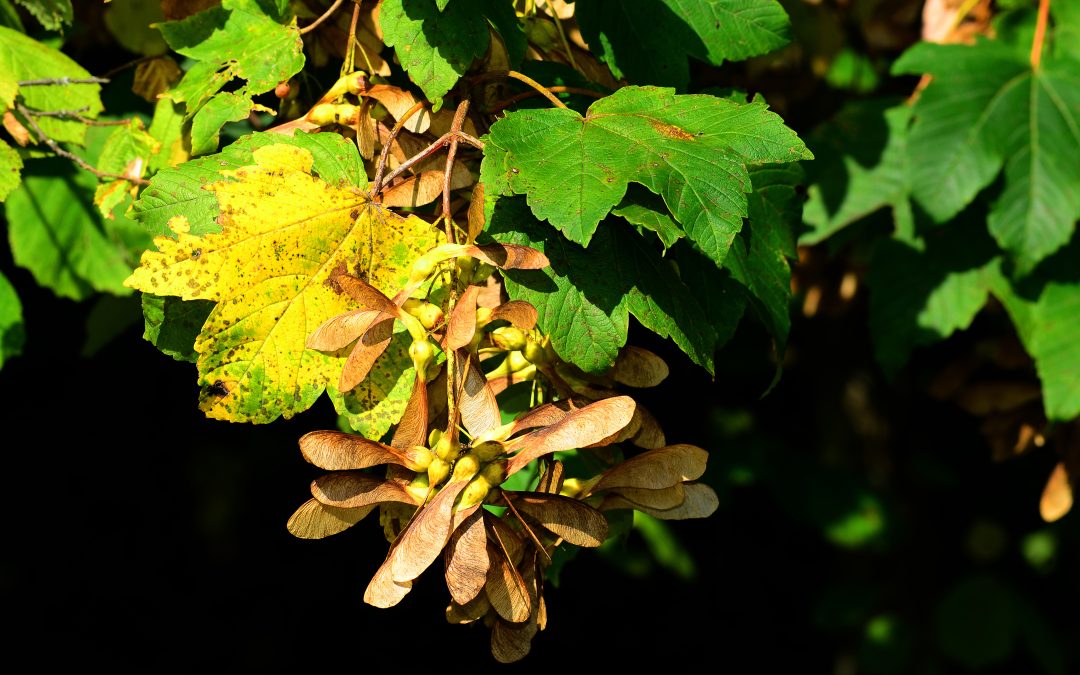
Autumn leaves, muddy fields, darker evenings… and those little helicopter seeds that seem to get absolutely everywhere!
Ahhh, autumn. Don’t we just love it?!
Unfortunately, alongside the usual joys of British weather, autumn brings a potentially deadly danger for our horses — atypical myopathy, commonly known as sycamore poisoning. Whilst most horse owners are now aware of the risks associated with sycamore seeds in autumn, what many don’t realise is that atypical myopathy isn’t exclusively an autumn problem.
With our increasingly unpredictable weather, it’s important to remain vigilant throughout the year, particularly in spring when sycamore seedlings begin appearing. So, what exactly is atypical myopathy, why is it so dangerous, and what can we do to reduce the risk?
What is atypical myopathy?
Atypical myopathy (AM) is a severe and potentially fatal muscle disease caused by toxins found in certain trees, most notably the sycamore (Acer pseudoplatanus) here in the UK.
The main toxins involved are hypoglycin A (HGA) and methylenecyclopropylglycine (MCPG), which are found in sycamore seeds and seedlings. When ingested, these toxins interfere with the body’s ability to use fats for energy. This causes serious disruption to muscle metabolism, resulting in widespread muscle damage.
These are not just the muscles your horse uses to walk, trot and canter but also those involved in breathing and maintaining posture can also be affected. This is one of the reasons this condition can become life-threatening so quickly. Horses can deteriorate rapidly, sometimes within hours of showing the first clinical signs.
This is a genuine veterinary emergency, and early recognition can make a significant difference.
But surely sycamore poisoning is an autumn problem?
Well, yes… but also no! Autumn is traditionally the highest-risk period because sycamore trees shed their characteristic winged seeds, commonly known as helicopters. However, spring is another important risk period when those seeds germinate and produce seedlings.
The problem is that our weather doesn’t always behave itself!
Strong winds can carry seeds considerable distances, heavy rain can wash them into grazing areas, and changing weather patterns can influence when seeds fall and seedlings emerge. This means that the risk doesn’t necessarily begin and end neatly with the seasons.
A mild spell followed by wet weather may encourage seedlings to appear, while autumn storms can deposit large numbers of seeds into fields that were previously relatively clear.
And here’s something worth remembering: you don’t actually need a sycamore tree in your field to have a problem.
Seeds can blow in from neighbouring land, roadsides and woodland. They can also be carried by water into lower-lying areas. So, before assuming your paddock is safe because there isn’t a sycamore tree growing in it, have a good look around the boundaries.
Why do some horses become ill while others don’t?
This is one of the frustrating things about atypical myopathy. You can have several horses grazing the same field, exposed to the same trees, and yet only one may become seriously ill. The amount of toxin varies considerably between individual trees, seeds and seedlings. The quantity consumed also matters, along with individual differences between horses.
This makes it extremely difficult to predict which horses will become affected. A horse may have grazed the same field for years without a problem, but that doesn’t mean the field is safe. Equally, just because one horse becomes ill doesn’t mean the others are necessarily in the clear.
If one horse is diagnosed with suspected atypical myopathy, every horse sharing that grazing should be considered potentially exposed.
What signs should you be looking for?
One of the biggest problems with atypical myopathy is that the early clinical signs can be mistaken for other conditions, including colic, tying-up or general illness.
Keep an eye out for:
- Sudden weakness or stiffness — your horse may appear reluctant to move, walk stiffly or struggle to stand.
- Muscle trembling or twitching — particularly around the shoulders and hindquarters.
- Sweating — sometimes excessive, even when the horse hasn’t been exercising.
- An increased heart rate — which can be significant, even when the horse is standing quietly.
- Dark brown or reddish urine — caused by myoglobin released from damaged muscles.
- Depression or unusual lethargy — your normally bright horse may appear unusually quiet or subdued.
- Difficulty standing or getting up — severely affected horses may become recumbent.
- Difficulty breathing — in more advanced cases, respiratory muscles may become affected.
One particularly important point is that horses suffering from atypical myopathy may continue to show an interest in eating, even when they are seriously ill. So please don’t assume that because your horse is still picking at hay, everything must be OK. And remember, not every affected horse will show all these signs. Don’t wait for dark urine or for your horse to go down before calling the vet.
What should you do if you suspect atypical myopathy?
Phone your vet immediately.
Not tomorrow morning. Not after you’ve finished the yard jobs. And definitely not after seeing whether your horse improves with a bit of rest.
If you suspect atypical myopathy:
- Contact your vet urgently. Explain the clinical signs and whether your horse has had access to sycamore seeds or seedlings.
- Do not force your horse to walk. Movement can worsen muscle damage. Keep them quiet and comfortable while waiting for veterinary advice.
- Remove access to the suspected grazing. Other horses should be moved to a safe area, provided they can be moved without difficulty.
- Provide safe forage and fresh water. Follow your vet’s advice regarding feeding and supportive care.
- Check the other horses. Even if they appear perfectly normal, they may have been exposed and could require veterinary assessment.
There is no specific antidote for atypical myopathy.
Treatment focuses on intensive supportive care, including intravenous fluids where appropriate, pain management, correction of metabolic and electrolyte disturbances, and monitoring for complications.
Blood tests can help identify the extent of muscle damage, particularly through measurement of creatine kinase (CK), while specific testing may help confirm exposure to sycamore toxins.
Unfortunately, despite treatment, the mortality rate remains high. This is why prevention is so important.
So, how can we reduce the risk?
The good news is that there are practical steps we can take to minimise exposure.
1. Know where your sycamore trees are
Take a walk around your grazing. And I mean a proper walk — not just a quick glance while you’re bringing the horses in!
- Check the field boundaries, neighbouring gardens, woodland and hedgerows.
- Remember that sycamore seeds can travel considerable distances in windy weather.
If you’re unsure whether a tree is a sycamore, get it identified rather than guessing.
2. Keep an eye on those helicopters!
Sycamore seeds are particularly concerning during autumn. Following strong winds or storms, inspect grazing areas carefully, especially along fence lines, around gateways and in areas where seeds tend to collect. Where possible, prevent access to contaminated grazing. Simply removing a handful of visible seeds doesn’t necessarily make a field safe, particularly when large numbers may be hidden in the grass.
3. Don’t forget the seedlings
Spring brings another risk. Those little green seedlings popping up in your fields might look fairly harmless, but sycamore seedlings can contain significant concentrations of toxin. Inspect fields regularly during germination periods. Where seedlings are present, prevent horses from grazing the affected areas until the risk has been properly addressed either with using ruminants (sheep or cattle) to graze the ground before horses as they aren’t affected by the toxin due to its breakdown in their stomachs.
4. Fence off high-risk areas
If you have sycamore trees close to your paddocks, consider temporary electric fencing to prevent horses from accessing areas where seeds or seedlings are accumulating. Remember that wind and water can carry seeds beyond the immediate area beneath the tree. Sometimes sacrificing a small section of grazing is far preferable to risking your horse’s health.
5. Provide plenty of suitable forage
- Horses grazing poor-quality or sparse pasture may spend more time searching for whatever vegetation is available.
- Providing sufficient good-quality hay or haylage can reduce the temptation to forage among potentially contaminated material.
- However, supplementary forage does not make a contaminated field safe.
If sycamore seeds or seedlings are present in significant quantities, removing access to that grazing remains the safest approach.
6. Consider a safer turnout area
If you have access to a paddock away from sycamore trees, this may be a better option during higher-risk periods. A well-managed, sycamore-free turnout area or suitable surfaced turnout area can be particularly useful. Just remember that rotating horses between contaminated paddocks doesn’t eliminate the risk.
7. Check after bad weather
This is especially relevant to those of us living in Staffordshire and the surrounding areas, where autumn storms and wet weather are hardly unusual!
- After particularly windy or wet conditions, take a few minutes to inspect your fields before turning horses out.
- Pay attention to gateways, fence lines, ditches and areas where water collects.
You might be surprised by how many seeds have arrived overnight.
Can you test your pasture?
Yes, testing for sycamore toxins is possible through specialist laboratories, although availability and the types of samples accepted vary. Testing can help assess risk, particularly where owners are uncertain about the presence or toxicity of sycamore material. However, toxin concentrations can vary between different parts of a field and at different times of year. A single negative sample cannot guarantee that an entire paddock is safe. If you’re concerned about your grazing, speak to your vet about the most appropriate approach.
Take-home message
Atypical myopathy is one of those conditions that reminds us just how quickly a seemingly healthy horse can become critically ill. And the frustrating thing is that the danger can be sitting right under their noses in a field they’ve grazed quite happily for years.
We can’t control the weather, and we certainly can’t stop sycamore trees producing seeds. But we can be proactive.
Know your trees, inspect your grazing, watch for seedlings and don’t ignore changes in your horse’s behaviour. Most importantly, if your horse suddenly becomes weak, stiff, sweaty or reluctant to move, please pick up the phone. It might not be atypical myopathy, but it’s always better to have a vet assess a horse unnecessarily than to miss the early stages of a potentially fatal condition.
As we always say at Little Rock, looking after our horses is a team effort. A little knowledge, good field management and knowing when to ask for help can make all the difference. And if you’re worried about sycamore trees in your grazing, or you have any concerns about your horse, we’re always happy to have a conversation on 01782 898102
#LittleRockEquineVets #WhosInYourTeam #AtypicalMyopathy #SycamorePoisoning #EquineHealth #HorseWelfare #EquineVet #HorseOwnersUK #AutumnHorseCare #StaffordshireHorses