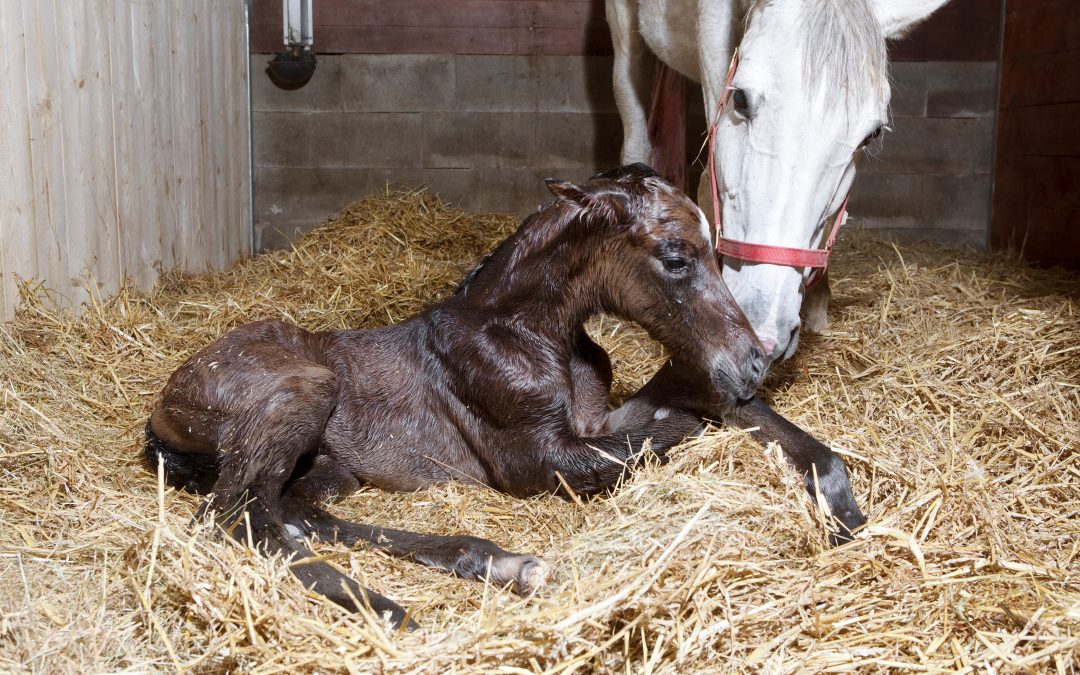
It’s that time of year again, and we are delighted to be seeing the first foals arriving across the Little Rock Equine practice—with many more still to come. There’s nothing quite like a new foal on the ground: long legs, curious eyes, and that unmistakable sense of excitement for what’s to come.
But if you’re thinking about breeding from your mare, it’s worth taking a step back and considering both the rewards and the risks—because while breeding can be incredibly rewarding, it’s not without its challenges.
The Brilliant: Why We Breed
Let’s start with the positives—because when it goes well, breeding horses is hard to beat.
- Producing your ideal horse
Whether you’re aiming for a future competition prospect or a much-loved family horse, breeding allows you to carefully select bloodlines, temperament, and ability. - The joy of the journey
Watching a foal grow, develop, and eventually be backed or competed is something many owners find deeply fulfilling. - Advancing genetics
With modern reproductive techniques such as artificial insemination (AI), it’s now possible to access top-class stallions from across the world without leaving your yard.
The Good: Advances in Breeding & AI
Artificial insemination has transformed equine breeding, offering:
- Greater stallion choice – including international genetics
- Improved safety – reducing the risks associated with natural covering
- Flexibility – chilled and frozen semen options to suit different mares and management systems
With careful planning and veterinary support, AI can achieve very good conception rates—particularly with chilled semen and well-managed cycles.
The Bad: Risks to Consider
Breeding is not a guaranteed success, and it’s important to go in with realistic expectations.
For the Mare
- Failure to conceive – even with good management
- Pregnancy loss
- Foaling complications (which can be life-threatening)
- Post-foaling issues such as retained placenta or infection
For the Foal
- Difficult births (dystocia)
- Neonatal illness (e.g. infections, failure of passive transfer)
- Developmental issues
Even in straightforward cases, breeding carries inherent biological risk.
The Reality: Costs and Commitment
Breeding is rarely a “cheaper way to get a horse.”
Costs to factor in:
- Stud fees
- AI and reproductive work
- Scanning and veterinary visits
- Livery and management
- Foaling care
- Youngstock raising for several years
And importantly:
- Time
- Facilities
- Experience (or access to good support)
Making the Right Decision
Before breeding, ask yourself:
- Is my mare suitable (health, temperament, conformation)?
- What is my goal for the foal?
- Am I prepared for the financial and time commitment?
- Do I have the facilities and support needed?
If the answer to any of these is uncertain, it’s worth having a conversation with us before proceeding.
How We Can Help
At Little Rock Equine Vets, we support clients through every stage of the breeding process:
- Pre-breeding examinations
- Cycle monitoring and AI
- Pregnancy diagnosis and care
- Foaling advice and emergency support
- Neonatal care for foals
Final Thoughts
Breeding horses can be one of the most rewarding experiences in equine ownership—but it’s not something to enter into lightly.
When everything goes right, it’s truly brilliant.
When things don’t go to plan, having the right preparation and support makes all the difference.
If you’re considering breeding this season, we’re always happy to talk through your options on 01782 898102 and help you make the best decision for you and your mare.