
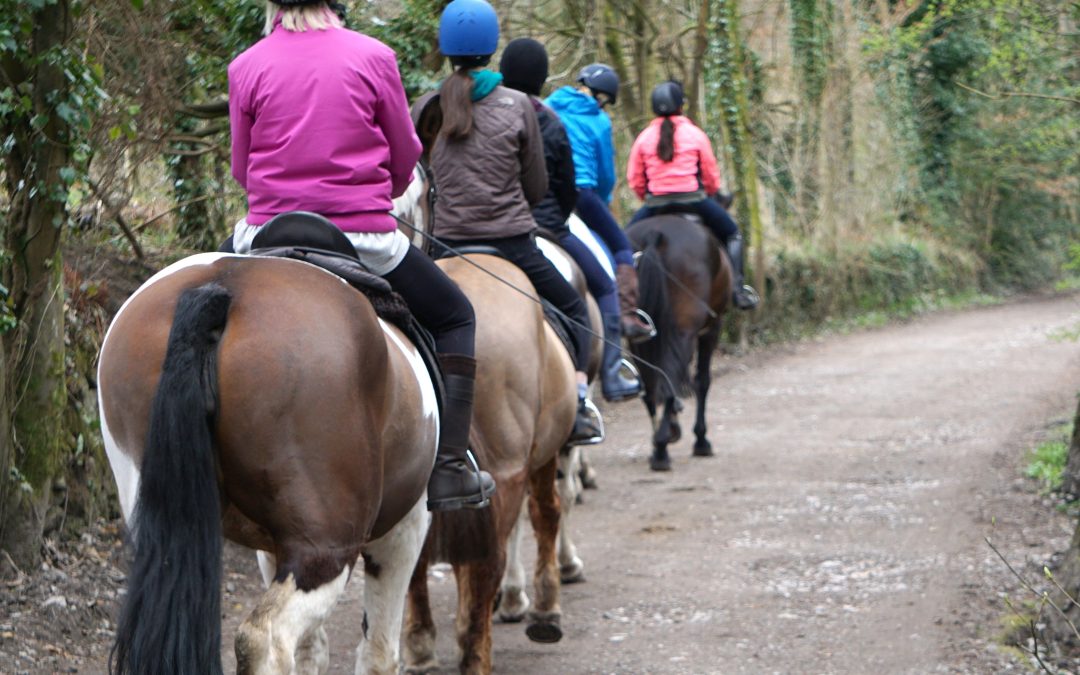
When it comes to horse fitness and conditioning, many riders immediately think of schooling sessions in the arena. It’s controlled, predictable and during winter it can be the easiest place to ride.
But sometimes the best training advice can sound a little controversial.
I was having a conversation with one of our owners the other evening. When she first started working with her young horse, he was tall, narrow and had very poor topline. He was still growing, but she wanted to know how she could support his development and help him become stronger all over.
The short version of a very long conversation was simple:
“He needs to hack. Hack, hack and hack.”
Find hills and ride up them — not on a loose rein, but in a way that encourages him to carry himself properly.
Then I said the most blasphemous thing of all…
“Stay out of the school as much as you can.”
So why would a vet say that?
Are Arena Surfaces Limiting Horse Fitness?
The reality is that many horses spend far too much time working on arena surfaces.
Let’s be honest — arenas are convenient. They provide consistent footing, require little effort to access and make riding in winter far easier for the rider.
But when it comes to developing true horse fitness and strength, they are often not enough.
Whilst technology has moved on dramatically in the equestrian world, the horse itself hasn’t evolved. Yes, horses often live longer today, but in many ways they can also be more prone to injury.
A lot of this comes down to how we train and condition them.
Working repeatedly on flat, consistent surfaces does little to build the functional strength, balance and resilience that horses naturally develop when moving across varied terrain.
Why Variety is Essential for Horse Conditioning
In the wild, horses travel across different ground every day — hills, uneven terrain, grass, tracks and fields. This natural movement helps develop:
- Core strength
- Topline development
- Joint stability
- Balance and coordination
- Cardiovascular fitness
When horses are trained exclusively in arenas, they miss out on this natural strengthening process.
Arena work certainly has its place, particularly for technical schooling, but it should not be the foundation of a horse’s fitness programme.
Hill Work: One of the Best Exercises for Horses
If there is one exercise that consistently improves horse fitness and conditioning, it is hill work.
Riding uphill encourages horses to:
- Engage their hindquarters
- Lift through their back and topline
- Strengthen important core muscles
- Improve overall stamina and fitness
However, how the horse works up the hill is important.
Simply wandering up on a long rein will not build strength. Instead, the horse should be encouraged to work forward into a contact and carry themselves correctly, allowing the right muscles to develop.
Hill work is particularly valuable for:
- Young horses developing strength
- Horses lacking topline
- Competition horses building fitness
- Horses returning to work after time off
Building Horse Fitness Before Competition
One of the most common mistakes we see in practice is horses being asked to compete before they are truly fit.
A proper horse fitness and conditioning plan should ideally take 8–12 weeks, gradually increasing workload to allow the horse’s muscles, tendons and cardiovascular system to adapt.
A fitter horse is far less likely to suffer injury, particularly when training intensity increases or competition season begins.Fitness is not just about performance — it is about long-term soundness.
Making the Most of the Hills in Staffordshire
Here in Staffordshire, we are incredibly fortunate.
We have hills — and plenty of them.
These natural training tools provide an excellent opportunity to build horse fitness safely and effectively. Regular hacking across varied terrain helps create horses that are:
- Stronger
- More balanced
- Mentally relaxed
- More resilient to injury
Sometimes the best conditioning programme is simply getting out of the arena and exploring the countryside.
Conditioning Older Horses
Of course, every horse is different.
Older horses still benefit greatly from regular exercise, but their workload should always be adapted to suit their individual needs.
Steady hacking, gentle hill work and varied terrain can help maintain joint mobility, muscle strength and overall wellbeing.
Keeping older horses active — within their limits — is one of the best ways to support long-term health and comfort.
The Key to Horse Fitness: Get Out and Hack
Arena schooling has its place, but horses were never designed to live and work exclusively on artificial surfaces.
For horses to develop true fitness, strength and resilience, they need:
- Varied terrain
- Hill work
- Progressive fitness programmes
- Consistent conditioning
So sometimes the best advice really is the simplest.
Get out hacking. Find the hills. And use them.
Your horse will be stronger, fitter and far better prepared for whatever you ask of them.